Global
Asia
Europe
Africa
Oceania
Latin America
Bangladesh - English
China - 简体中文
India - English
Indonesia - Bahasa
Japan - 日本語
Malaysia - English
MENA - English
Philippines - English
South Korea - 한국어
Thailand - ประเทศไทย
Turkey-Türkçe
Vietnam - Tiếng Việt

LED Displays
LCD Video Walls
Digital Signage
Monitors
Controllers
Discontinued Products
Interactive Whiteboard
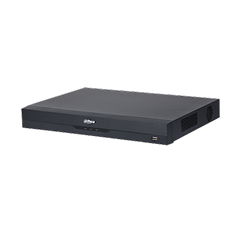
| Main Processor | Two 12 C/24 T X86 processors, 2.1 GHz |
|---|---|
| Operating System | Linux OS |
| Memory | Two 32 GB DDR4 memory modules with up to 32 slots |
| Disk | One 2.5" 480 GB SSD and two 3.5" 4 TB HDDs with up to 8 slots. |
| Network Port | 4 × 1000 Mbps self-adaptive network ports |
|---|---|
| USB | 2 × front USB2.0 ports and 2 × rear USB3.0 ports |
| VGA | 1 × VGA port |
| Others | 1 × RJ-45 management network port |
| Power Supply | 100–127/200–240 VAC, 60/50 Hz, 12/8 A |
|---|---|
| Power Redundancy | Dual |
| Power Consumption | Working (all HDDs connected): ≤660 W (2,252 BTU/h) |

| Operating Temperature | +10 °C to +35 °C (+50 °F to +95 °F) |
| Operating Humidity | 20%–80% (RH), non-condensing |
| Storage Temperature | –40 °C to +60 °C (–40 °F to +140 °F) |
| Storage Humidity | 5%–95% (RH), non-condensing |
| Gross Weight | 27 kg (59.52 lb) |
| Net Weight | 20.83 kg (45.92 lb) |
| Product Dimensions | 794.0 mm × 446.0 mm × 87.8 mm (31.26" × 17.56" × 3.46") (D × W × H) |
| Packaging Dimensions | 1000 mm × 600 mm × 260 mm (39.37" × 23.62" × 10.24") (D × W × H) |
| Installation | Standard 19" rack installation with guide rail |
| Product Type | Hardware |
|---|
| Resource Management | Supports allocating computing resources, including CPU, memory, GPU and other hardware resources. The unified management of computing resources is also supported to provide computing resources for the analytical system. Computing resources can be centrally scheduled based on service requirements, to eliminate hardware resource differences and externally provide a unified resource pool. Supports monitoring the registration process and the running status of computing resources. You can also perform operation and maintenance as needed. Virtualizes computing cards into multiple fragments, and provides refined control of computing resources. |
|---|---|
| Service Scheduling | The system not only supports the unified management and flexible allocation of algorithms, but it also comes with a variety of algorithms built into it. It provides a unified call interface to the application side and offers the option to select multiple functions at the same time. Schedules algorithms across different types of architecture. The algorithms easily adapt to 2 or more architectures at the same time, such as the arm and x86 architectures. The supported options are: Face recognition, license plate recognition, pedestrian recognition, human metadata, and motor-vehicle and non-motor vehicle metadata. |
| Intelligent Task Scheduling | Manage analysis and retrieval tasks, and execute strategies for different tasks through resource scheduling modules and task scheduling strategies. Adjust task strategies based on the actual workload and task priorities, and assign intelligence analysis tasks to corresponding analysis engines for processing. |
| Cluster Management | With cluster management, you can manage multiple service modules, and enjoy access to non-stop services through cluster scheduling. The service load of each node can be adjusted based on the service load. |
| Network Authentication Management | Conveniently authorize algorithms and the number of cards for computing power servers through the network authentication box. |
| Third-Party Algorithm Access | Manages third-party algorithm access. The system provides a standard interface for connecting third-party algorithms to the algorithm warehouses of intelligent view engine. You can allocate and load third-party algorithms to computing resources to realize algorithm instantiation. Service platforms can even specify the algorithm for task analysis. The intelligent view engine allocates computing power and schedules tasks. |